

Training Doesn't Build Entrepreneurs. Systems Do!
For a decade, we have worked alongside young women to help them build sustainable income. The evidence both ours and the sector keeps pointing to the same uncomfortable conclusion: skills and potential were never the missing piece.
A Decade of Lessons
The Ecosystem Is Fragmented, Not Missing
A young woman's enterprise journey runs through production, branding and packaging, compliance, enterprise financing and financial management, distribution, markets, and growth. In theory, that is one continuous journey. In practice, it is eight separate systems run by eight different actors, on eight different timelines, with no one responsible for the woman moving between them. She may learn to produce well, but never learn to price. She may access a loan, but have no market ready to absorb what she makes with it. She may build a strong product, but have no route to formal compliance that would let her sell to a bigger buyer. Each gap looks small on its own. Together, they are why so many young women build something and then stall. This is what we mean when we say "systems gap." Not that nothing exists, but that the existing system is fragmented.
Starting a Business Is Not the Same as Building One That Lasts
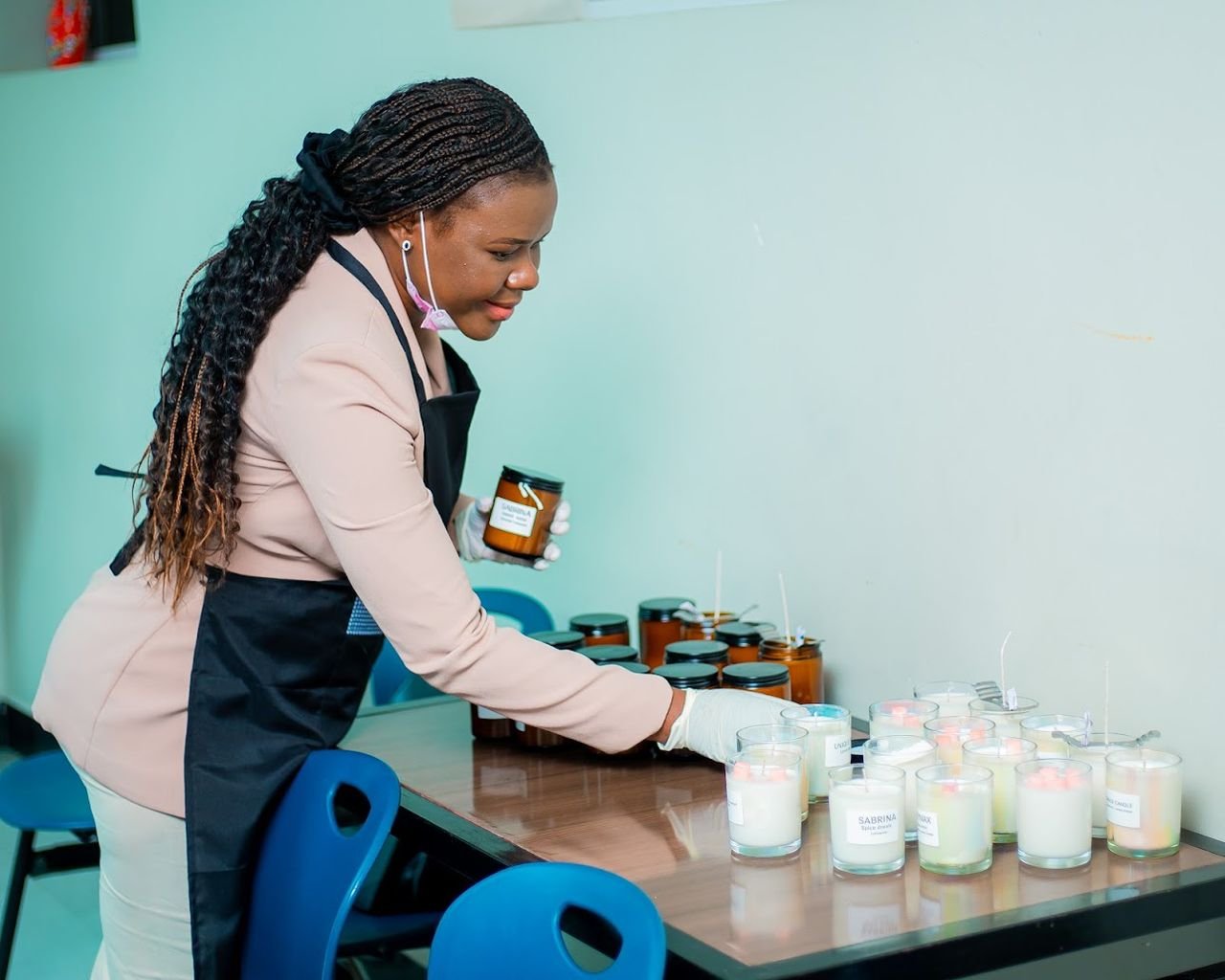
We have watched thousands of young women acquire skills and start businesses. That part of the story is often told as a success. What is told far less often is what happens next. Some of those enterprises stay at survival level indefinitely. Some go dormant. Some closed within a year or two not for lack of ambition, but because the support required for sustained growth was never there once the programme ended. And that is an important implementation lesson that has been consistent enough to make us evolve. Supporting 500 women start businesses is not the same as supporting 500 women build sustainable enterprises. That distinction now sits at the center of how we define success. The question worth asking is no longer "did she start a business?" It is: what does it take for her business to survive beyond the programme that helped her start it?
Enterprise Financing Looks Different Throughout the Enterprise Development Journey
Finance keeps showing up as one of the biggest missing pieces, but our experience has also taught us that capital alone is not the answer either, skills without capital can leave a young woman unable to act on what she knows, while capital without entrepreneurial capability, market understanding and financial discipline can establish a business but not sustain it. The real question is not "does she have access to finance?" But what capital, at what stage, for what purpose, and alongside what support. This is why we are testing multiple instruments rather than defaulting to one. A startup kits that combine materials and cash, savings through Village Savings and Loan Association (VSLA) linked models, matching approaches that reward saving behavior, and early exploration of private-sector financing.
Rights and Agency Travel With Her, Not After Her
A young woman needs agency from day one: to negotiate with a supplier, to approach a customer with confidence, to control her own income, to seek finance on fair terms, to navigate institutions that were not built with her in mind, and to recognize and respond to exploitation when it appears. Rights awareness is part of what keeps her safe and in control of her own enterprise at every stage of the journey. Every business hits a shock. It might be that a product fails, costs rise, a supplier disappears or a market shifts overnight. The deeper measure of economic power is whether a young woman has the agency and problem-solving ability to adapt when plans don’t go as envisioned. Agency builds resilience which is not merely a soft add-on to economic empowerment. It is what determines whether the gains we help create in year one are still standing in year three.
Access to Technology Is Not Access to Income
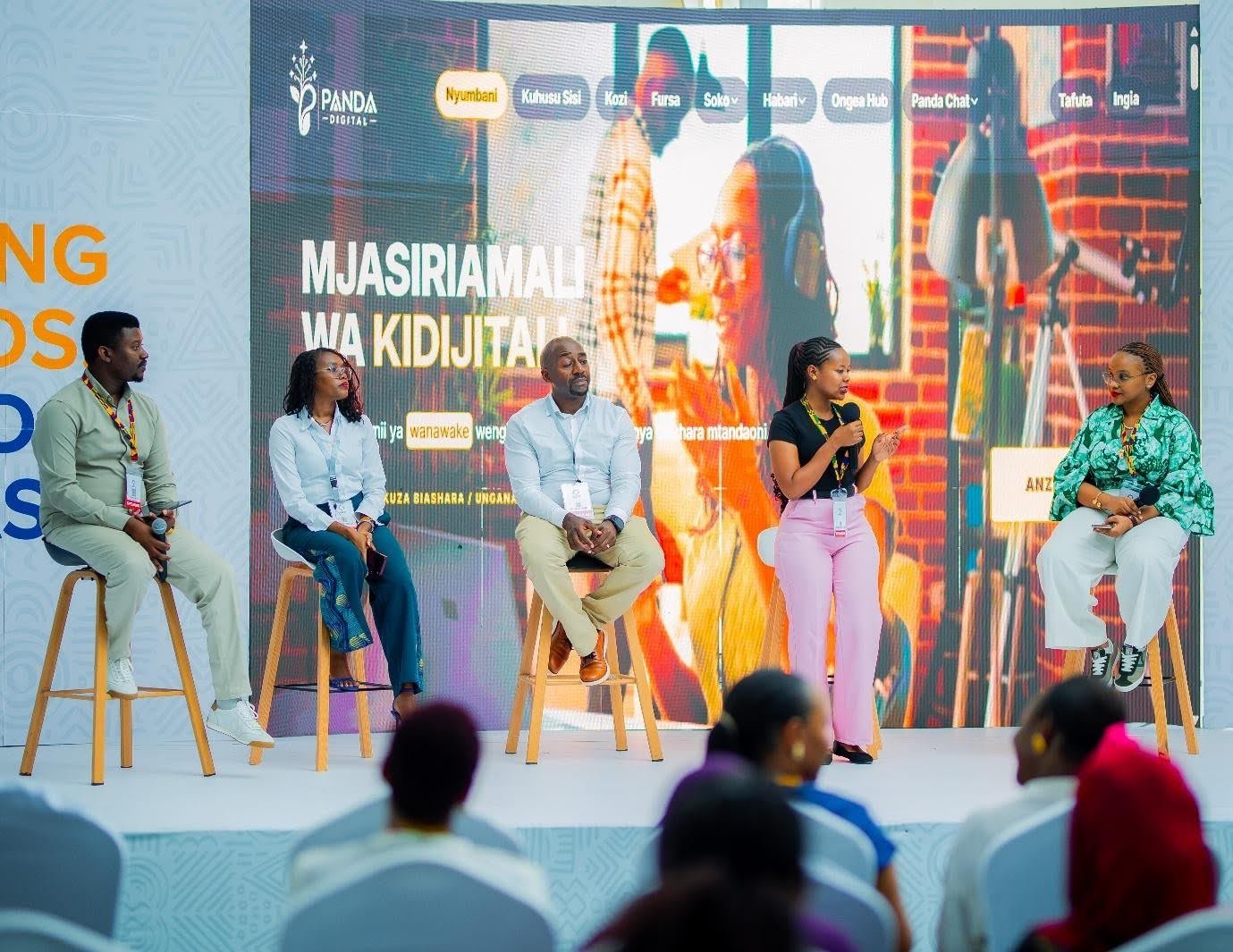
Digital access has genuinely expanded what is possible for young women in Tanzania but our own evaluations taught us that learning alone does not automatically translate into increased income or business growth; additional support is needed to help users move from learning to earning. That finding has shifted how we think about digital tools. We have moved from asking "how do we give her access to digital learning?" to asking "how do we help her use technology to actually participate in the economy?" digital marketing, digital payments, online customer acquisition, market information, and now, increasingly, AI-enabled tools to support enterprises development. Technology is a channel for economic participation. It is not, by itself, the outcome. Young women achieve better outcomes when skills are intentionally connected to finance, digital tools, mentorship and markets.
Our New Chapter
These lessons are shaping the next role we are growing into. We can't fix a fragmented ecosystem alone. Finance needs financial institutions, compliance needs regulators, distribution needs market actors. Our next chapter involves connecting the pieces around a young woman instead of just handing her one more skill and wishing her luck. A decade of lessons doesn't stay theoretical forever. We've been building something quietly, deliberately, for longer than most people watching from outside would guess.
We're not ready to show you all of it yet. But it's coming. And when it does, you'll see exactly why it matters in building young women’s economic power.