

“A child's future is often determined long before they enter a classroom.”
It is a statement that challenges a common assumption that education begins when a child starts school.
In reality, some of the most important foundations for learning, health, confidence, and wellbeing are established much earlier. By the age of five, nearly 90% of a child's brain development has already taken place, shaping how they learn, relate to others, and navigate the world around them.
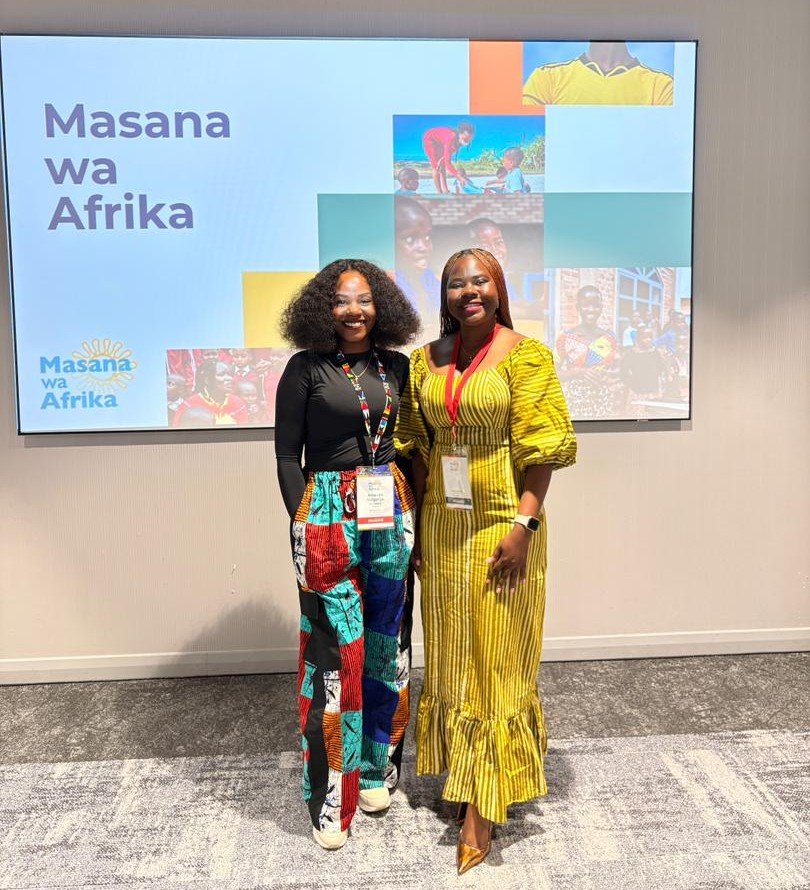
This understanding sat at the heart of the Masana wa Afrika Early Childhood Development (ECD) Conference and Finance Workshop, where Her Initiative's Executive Director and Finance Officer joined practitioners, funders, and development leaders from across Africa to explore what it takes to create environments where children can truly thrive.

The gathering brought together organizations working across different sectors and contexts, yet a common message emerged throughout the discussions: children do not develop in isolation.
Their wellbeing is influenced by families, caregivers, communities, institutions, and the systems designed to support them. When these systems work together, children are more likely to grow, learn, and reach their full potential. When they fail, the effects can last a lifetime.

As conversations unfolded, participants explored the interconnected elements that shape Early Childhood Development from responsive caregiving and safeguarding to disability inclusion, nutrition, and access to quality services. The discussions reinforced that meaningful investment in children requires more than individual interventions. It requires strong, coordinated systems capable of supporting both children and those responsible for their care.
For Her Initiative, these conversations resonated deeply with our belief that empowering women and girls begins long before adulthood. The opportunities available to a young woman today are often shaped by the care, protection, support, and nurturing she received during childhood. As an organization working to ensure that adolescent girls and young women can learn, earn, and lead with confidence, we recognize that strong foundations in the early years are critical to building a future where every girl can reach her full potential. Participating in the conference provided an opportunity to deepen our understanding of how investments in Early Childhood Development contribute to the long-term wellbeing, agency, and resilience of future generations.
One reflection stood out particularly strongly throughout the conference: investing in children is not simply about addressing immediate needs. It is about shaping the future of entire communities.
A child who receives the care, protection, and support they need today is more likely to become a healthy, confident, and productive adult tomorrow. The ripple effects extend far beyond individual households, influencing education outcomes, economic participation, and community wellbeing for generations to come.
Alongside the ECD discussions, the Finance Workshop highlighted another critical component of sustainable impact: organizational strength.

Participants engaged in conversations around budgeting, financial reporting, accountability, internal controls, and long-term sustainability. While these topics may seem separate from Early Childhood Development, they are essential to ensuring that organizations can consistently deliver quality services and remain accountable to the communities they serve.
The workshop reinforced an important lesson: impactful programs are built on strong systems. Whether supporting children, women, or entire communities, sustainable change requires organizations that are equipped to manage resources effectively, learn continuously, and adapt to evolving needs.
Equally valuable was the opportunity to learn alongside fellow Masana grantees from across the continent. Through shared experiences, honest conversations, and collective reflection, participants explored what community-rooted development looks like in practice and how organizations can strengthen their approaches to create deeper and more lasting impact.
As development conversations continue to evolve, one thing remains clear.
Investing in children is not charity.
It is long-term systems building.

It is an investment in healthier communities, stronger economies, and more equitable societies. And it begins long before a child ever walks through the doors of a classroom.
Because when we invest in the earliest years of life, we are not only supporting children we are shaping the future they will inherit.