

Every so often, an organization pauses, not to look outward, but inward. Not to ask what more we can do? But what more can we learn from each other?
This November, we did exactly that.
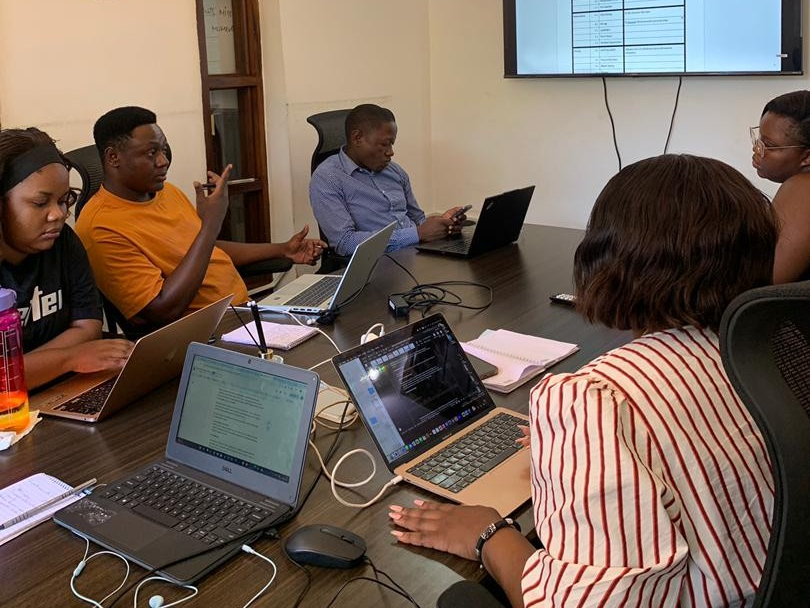
Across three rich knowledge-sharing sessions, each department Communications, Resource Mobilization, and Monitoring & Evaluation stepped forward to teach the rest something essential about their craft. It felt like sitting in a circle with teammates who were not just colleagues but people who genuinely want the entire organization to grow.
These sessions created moments of understanding, giving us that thought that “Oh so this is what makes your work so impactful.” And that shifted something in all of us.
1. Communications: Seeing Our Work Through Storytelling Eyes
The Communications session opened with something surprisingly simple: “clean your camera lens.” We laughed, but honestly it set the tone. It reminded us that sometimes the small habits shape the biggest outcomes.
From there, the team walked us through what effective content creation really looks like not as a technical skill, but as an intentional practice of storytelling.
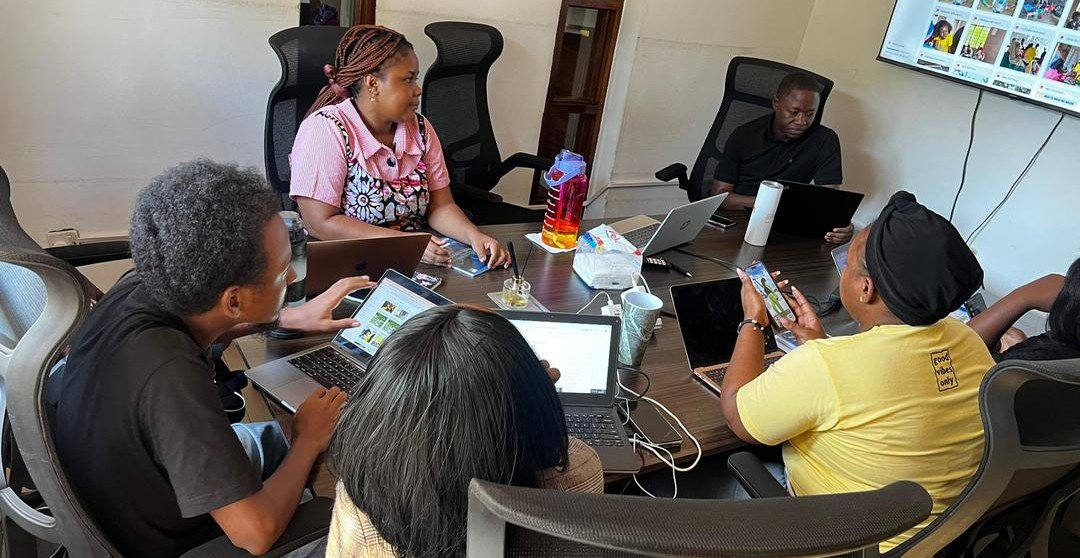
We learned that lighting is not about brightness; it is about honoring the person in front of the camera. Stability is not about perfection; it is about respect for the moment you are capturing. Creativity is not a talent reserved for certain people; it is a mindset of curiosity - What story is happening here? What story is not being seen?
They reminded us that our work deserves to be seen in its full depth, joy, effort, impact, transformation. That capturing a mentor leaning in to encourage a hesitant participant or a girl smiling as she codes for the first time is not just “taking photos.” It is preserving evidence of change.
Their guidance was practical orientation, movement, use of the grid, when to hold your camera horizontally or vertically but the heart of their message was this:
“Every image you take is part of our collective memory. Make it intentional, make it human, make it real.”
2. Resource Mobilization: Understanding the Heartbeat of Partnerships
Then came the Resource Mobilization session, an eye-opener for many of us.
They introduced the Qualified Prospect Index (QPI), but not as a cold formula. Instead, they framed it as a way of understanding people, relationships, and readiness.
Yes, the categories, capacity, relationship strength, timing, giving history, philanthropic profile were numerical. But behind every number was a lived story: a philanthropist who once supported girls’ education because of her own experiences, a company that funds youth innovation because its founders were once young dreamers too, a foundation that stepped forward in a moment of crisis.
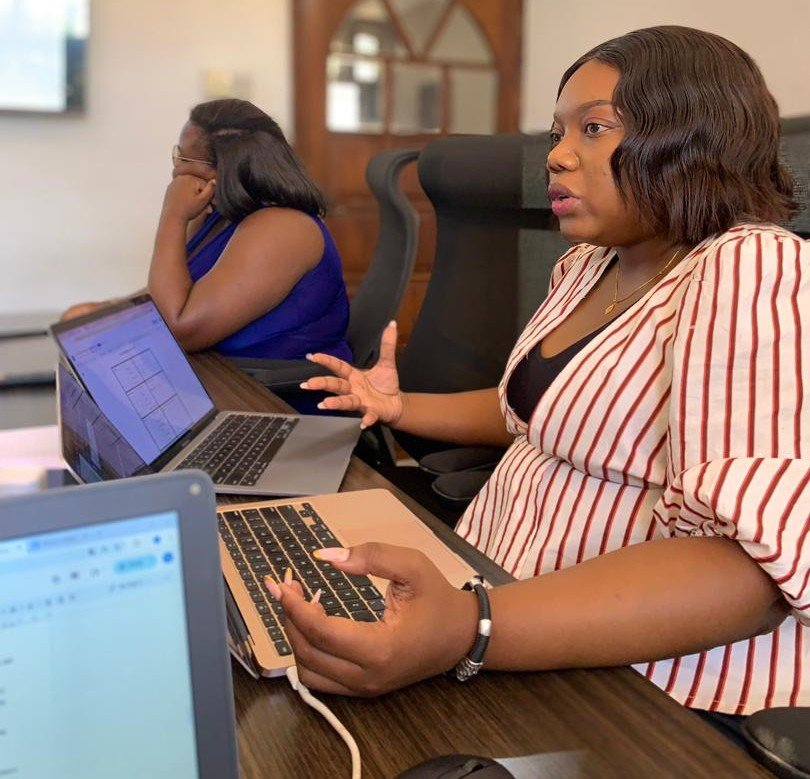
The team helped us understand that raising resources is not about asking for money, it is about inspiring belief. It is about matchmaking people’s passions with transformative projects.
We reflected on how timing matters, how relationships must be nurtured, and how each potential partner comes with unique motivations that must be understood deeply and respectfully.
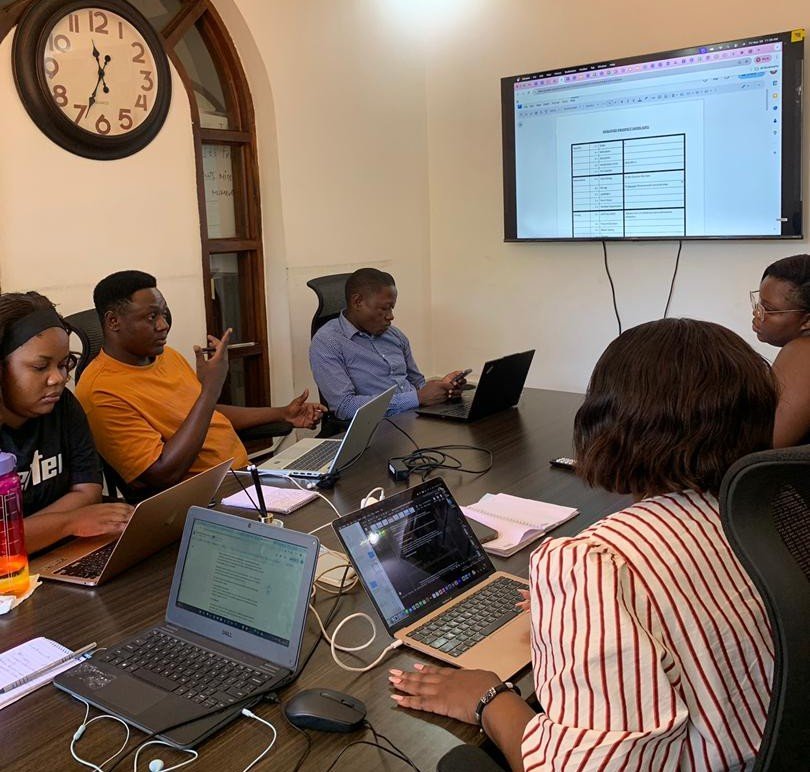
What stood out most was the reminder that fundraising is a team sport. We all have a role whether we are in the field, behind a camera, writing a report, or implementing a program. Every department contributes to how partners perceive us and connect with our purpose.
The resource team left us with a powerful truth:
“A strong partnership does not begin with an ask, it begins with understanding.”
3. Monitoring & Evaluation: The Art of Telling the Truth of Our Work
The Monitoring & Evaluation department’s session brought us home to something fundamental: How do we tell the true story of our work?
Their focus was on proper report writing not as a bureaucratic requirement, but as a responsibility. They walked us through the purpose of each section in a report template, explaining why indicators matter, why numbers must speak clearly, and why narrative context is essential.
They emphasized that M&E is not about filling boxes but about capturing change with honesty, clarity, and depth. When a report is done well, it becomes a mirror reflecting not just what we did, but what shifted in the lives of the people we serve.
One powerful moment was when they explained the importance of showing progress through both data and lived experience. A percentage alone cannot show resilience. A story alone cannot show scale. But together they make our work undeniable.
Their message stayed with us:
“A report is not just a document. It is our promise to truthfully tell the story of impact.”
These sessions were important as they helped us to understand each other better, so we can work together better.
We walked away feeling:
- More connected to each other’s roles
- More aware of how our work intersects
- More capable of aligning our efforts for greater impact
- More appreciative of the invisible labor each team carries
Knowledge-sharing made us realize that we are not three departments we are one engine driving change from different angles.
And as we move forward, we carry one shared understanding:
We are at our best when we learn from each other.