
We spend most of our time thinking about trust as something we build with the young women we work with. This time, we had to build it with each other first.
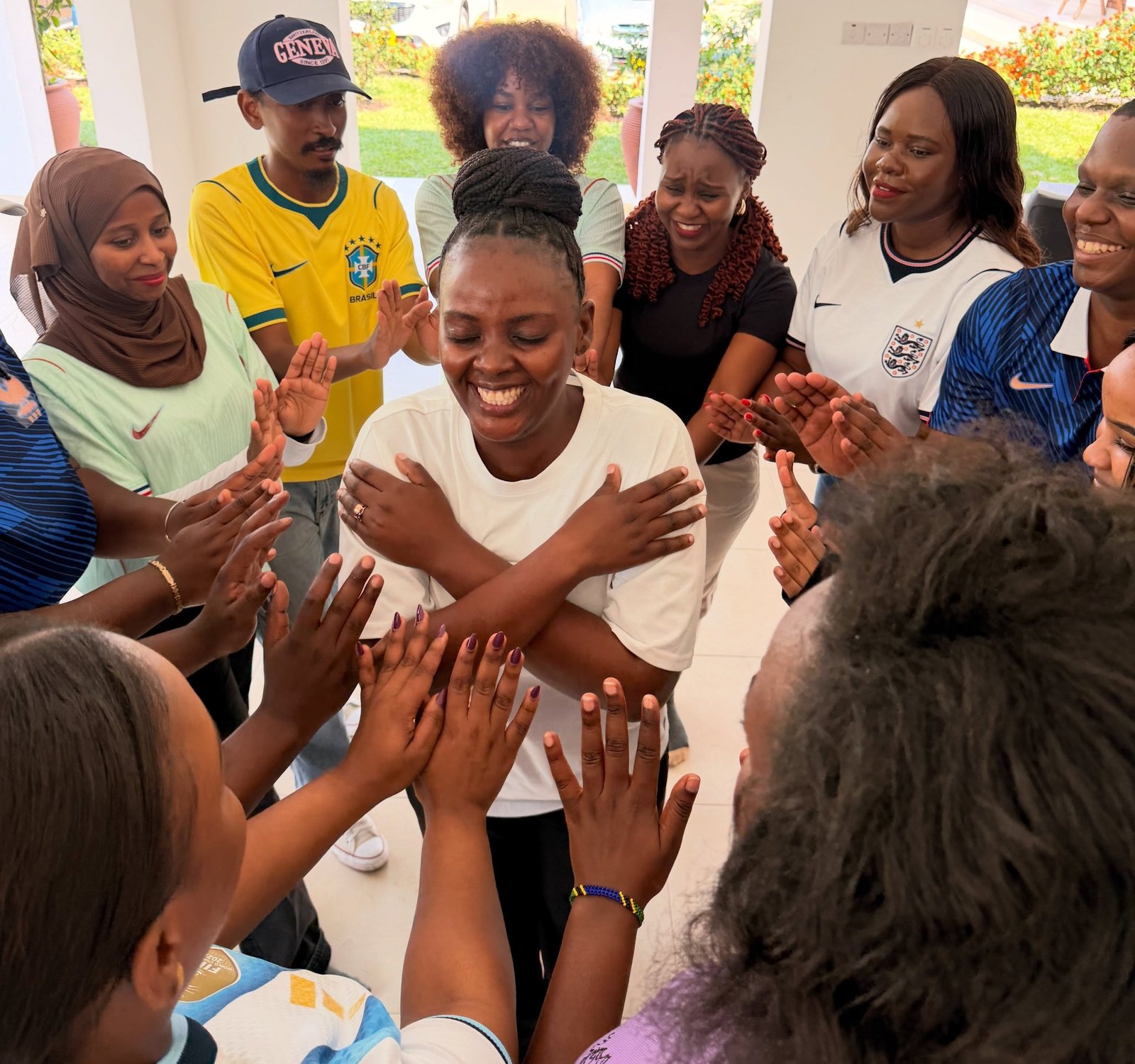
We spent time at the Nendiwe Centre not in a boardroom, not behind a strategy deck, but in movement, mindfulness, and dialogue, working through what it actually means to lead as a feminist organization that embodies a feminist wellness approach. Not feminist as a value statement rather feminist as a way of making decisions, holding conflict, caring for the people in the room.
It is easy to assume that kind of work is separate from impacting something you do for team morale. Once the real work is done, we do not think that anymore. Strong organizations aren't built by strategy alone. They are built by people who trust each other enough to be honest, to be uncertain out loud, to support one another through something that is not comfortable. We spent a few days doing exactly that, stepping outside what felt easy, and finding out what our team could hold together.
Here is what became clear: an organization that has not done this work internally will eventually run out of capacity to do it externally. You cannot ask a team to hold space for young women navigating real hardship if that same team has never been given space to be seen, heard, or cared for themselves. Psychological safety isn't the opposite of rigor. It's what makes rigor sustainable.
One idea reframed the whole conversation for us: Feminist wellness was never just about personal habits, self-care, rest, the things we tell each other to do more of. It's shaped by the daily conditions women are actually living inside. You cannot habit your way out of a system that isolates you.
What we kept coming back to was collective care; not something one person owns, but something a group builds together. Listening with real empathy. Checking on each other before something becomes a crisis. Sharing the weight of responsibility instead of letting it collect on one person's shoulders. Creating spaces where it's actually safe to say the hard thing. No woman should carry everything alone and a team that only notices when someone's already struggling has already waited too long.
We left with a simple way to check our own health as a community: do people feel safe enough to speak? Is there respect in how we disagree? Is support actually available, or just promised? Is anyone quietly isolated, even inside a group that looks connected?
Those are not just questions for how we treat each other internally. They are questions we are now asking of our programming too because feminist wellness understands that women’s wellbeing is shaped by daily life conditions, not just personal habits. And if collective care is what makes a team well, it is very likely what makes the communities and cohorts we work with well too. The same conditions that let our own team speak honestly are the conditions we want young women to experience inside every space we build for them.
We did not do this alone, either. Mama Marry Lusimbi and the team at Nendiwe Centre held this space for us with a level of care and skill we could not have built ourselves, which is its own reminder of something we keep relearning: the organizations that grow strongest are rarely self-sufficient. They're the ones who know which parts of their own capacity to trust to someone else.
When trust grows inside an organization, people flourish. When people flourish, the work they carry out into the world gets stronger too. That's not a separate track from our mission. It's the part of the mission that's harder to see.